
YPER — Healthcare Technology
Book a Demo

Introducing

YPER Smart Health CardYour ABHA, in Your Pocket.

YPER Smart Health Card is designed to provide a convenient way to identify patients and connect their healthcare information across participating hospitals, clinics, diagnostic centers, pharmacies, and other authorized healthcare providers.

Where ABHA linking is part of a deployment, the card is intended to support a faster check-in. The card carries an identifier. It does not store or display the medical record. Records stay in authorized systems, and access depends on consent and the permissions configured for that provider.

One card. A more connected healthcare experience.

  • The card identifies the patient
  • Records stay in authorized systems
  • Designed for participating providers
YPERSmart
Health Card

Card holder

Alex Morgan

Patient ID

YP-DEMO-2048

Issued 10/26

Fictional cardholder and ID. The QR graphic holds no data.

At the front desk

Designed for the moment of check-in.

At a participating facility, staff could present the card to a supported reader or identification workflow to find the right record before care begins.

  • The card carries an identifier. The record stays in the authorized system.
  • Supported reader hardware is confirmed during implementation.
  • No reader or patient database is connected to this illustration.
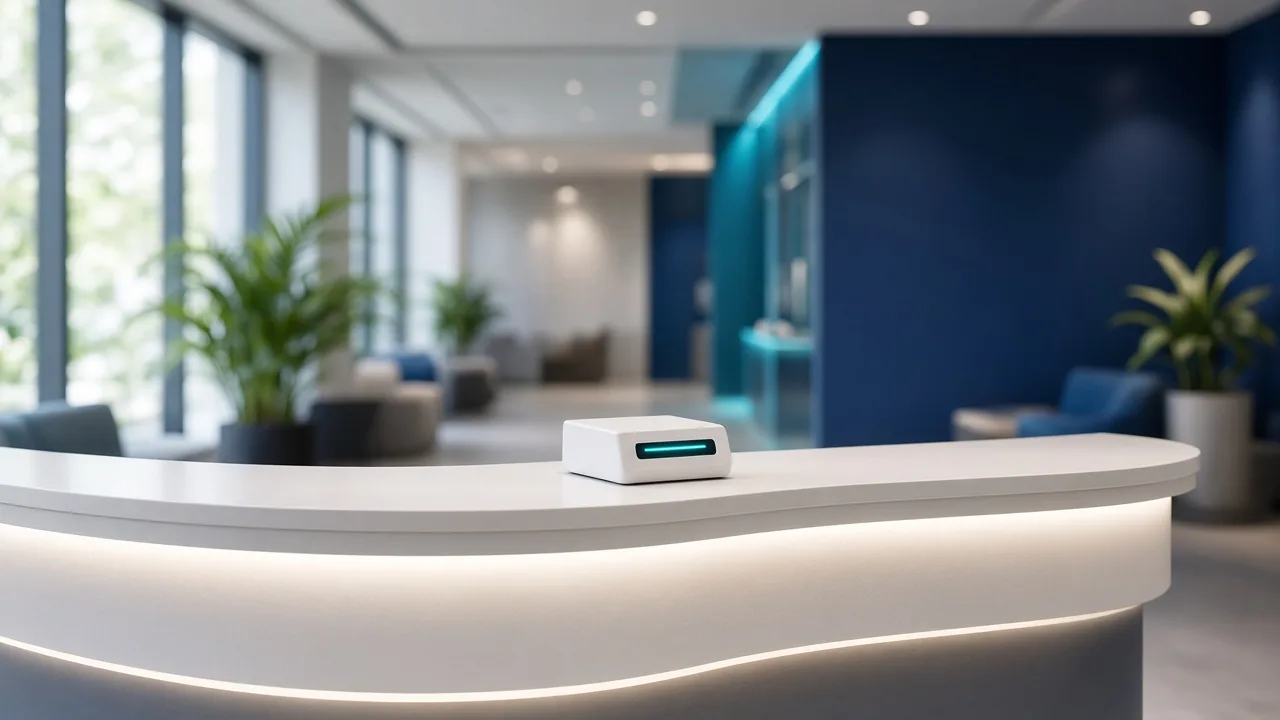
Modern healthcare reception desk with a card reader on the counter.

Secure connection · illustration only

Identification workflow — demo

  1. Card presentedDemo card
  2. Identifier readYP-DEMO-2048
  3. Record lookupNot connected in this demo
The reception photo is a generated image and the card is a design mockup with fictional data.

Proposed capabilities

One card. Six ways it is designed to help.

Select a capability to see how it is intended to work. Each one is proposed and depends on the integrations and permissions configured for a deployment.

  • The card carries an identifier, not the medical record itself.
  • Records are looked up only through an authenticated, authorized system.
  • Identifier formats and matching rules are defined during implementation.

Proposed capability · confirmed per deployment

How it works

From registration to continued care.

The intended workflow. Each stage depends on participating facilities, supported readers, and integrations set up for a deployment.

  1. 01

    Register

    The patient is registered through an authorized healthcare facility or supported digital registration workflow.

  2. 02

    Issue the Card

    A Smart Health Card is issued and linked to the patient’s authorized record through a secure identification process.

  3. 03

    Access Healthcare

    Authorized personnel at participating facilities use a supported reader or identification workflow to locate the patient’s record.

  4. 04

    Continue Care

    Authorized information can support consultations, referrals, follow-ups, and coordination between participating providers.

Sample interface

YPER Health Profile — Sample Interface

A preview of how an authorized provider might view a card holder’s profile. Every name, date, and value is fictional.

YPER Health ProfileDemo data — not a live patient record

Alex Morgan

YP-DEMO-2048 · Born 14 Mar 1990 · Sample City Hospital

Card linked · demo

Allergies

  • Penicillin
  • Peanuts

Chronic conditions

  • Asthma (recorded 2015)

Latest recorded vitals

122/80 mmHg72 bpm

Recorded Oct 26 · values only, no interpretation

  • Systolic (mmHg)
  • Diastolic (mmHg)
  • Pulse (bpm)
Sample vital-sign records
DateBlood pressurePulse
Mar 25118/76 mmHg72 bpm
Jan 26121/78 mmHg70 bpm
May 26117/75 mmHg74 bpm
Jul 26120/79 mmHg71 bpm
Aug 26119/77 mmHg73 bpm
Oct 26122/80 mmHg72 bpm

Recent activity

  1. 20 Aug 2026 · Consultation

    General medicine follow-up

    Sample City Hospital

  2. 12 Aug 2026 · Diagnostics

    Laboratory sample collected

    Sample Diagnostics

  3. 15 May 2026 · Consultation

    Teleconsultation

    Sample City Hospital

Emergency contact

Jordan MorganSibling+91 00000 00000

Architecture

Connected Healthcare Infrastructure

How the card is intended to connect a patient to authorized care through the YPER platform. Appearing in this diagram does not mean a system is connected.

Existing and verified (0)Proposed integration
  1. PatientProposed
  2. YPER Smart Health CardProposed
  3. Authorized Healthcare FacilityProposed
  4. YPER PlatformProposed
  5. Approved Healthcare SystemsProposed

Around the YPER Platform

  • Smart card readers
  • Patient registration
  • Electronic health records
  • Mobile health apps
  • Point-of-care devices
  • Teleconsultation
  • Provider dashboards
  • Third-party integrations

No integration in this diagram is verified as connected today, so every component is shown as proposed. A component is marked verified only after it is implemented and confirmed for a deployment.

Use cases

Built for Connected Healthcare Networks

Where a shared identification layer could support organizations that see the same people across different settings.

  • Hospitals and clinics

    Can help front-desk teams find the right record at registration and support continuity between departments.

  • Primary healthcare centers

    Gives community-level care a consistent way to identify returning patients.

  • Diagnostic centers

    Can link test orders and reports to the correct patient through an authorized workflow.

  • Community health programs

    Supports outreach teams that see the same people across camps, visits, and follow-ups.

  • Participating pharmacies

    Can help pharmacists confirm identity and view permitted allergy information where authorized.

  • Healthcare insurers

    Can support member identification within agreed, consent-based data sharing.

  • Public health initiatives

    Provides an identification layer that programs can connect to approved registries.

Privacy and security

Identification on the card. Records behind authorization.

These principles are design requirements for the Smart Health Card. They are confirmed for each deployment before they are described as implemented.

  • Encryption in transit and at rest

    Health information is meant to be encrypted wherever it moves or is stored.

    Design requirement

  • Secure authentication

    Staff and patients are expected to verify their identity before any record is shown.

    Design requirement

  • Role-based access control

    Each role is intended to see only the information its work requires.

    Design requirement

  • Patient consent and authorized sharing

    Sharing between providers is designed to follow recorded patient consent.

    Design requirement

  • Audit trails

    Record access is intended to be logged so it can be reviewed.

    Design requirement

  • Secure APIs and data-retention policies

    Integrations are meant to use authenticated APIs, with defined retention and deletion rules.

    Design requirement

The QR code never carries health information. The card is used only for identification. Sensitive records are retrieved through an authenticated, authorized system, and the QR graphic on this page is a non-functional demonstration.

Smart Health Card demo

Bring Connected Healthcare to Your Organization

Tell us about your network, the number of cards you are considering, and the systems you work with. A request is sent only when this website’s delivery service is configured.

contact@yper.in
Phone number with country code